
smartphone business opportunities
Related Devices
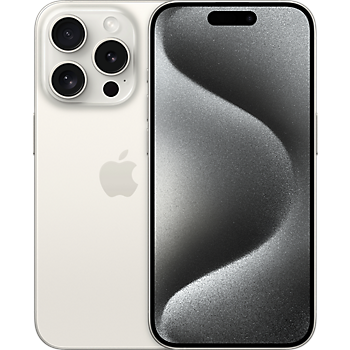
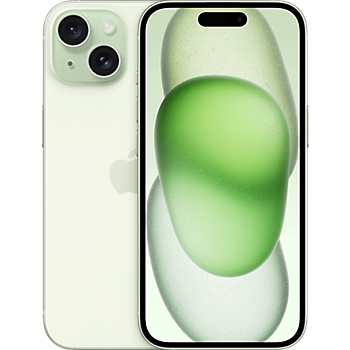
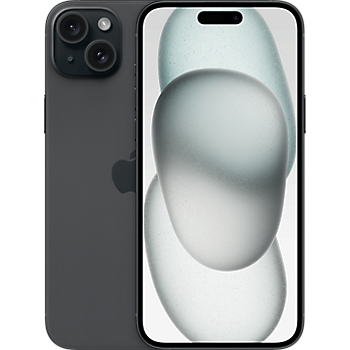
Questions related to "smartphone business opportunities"
Videos related to "smartphone business opportunities"
Verizon Small Business Digital Ready - Making Impact Across the Country
A Beauty Entrepreneur Dreams Big Small Business Digital Ready
3 ‘priceless’ lessons I learned from Verizon Small Business Digital Ready
Case Studies related to "smartphone business opportunities"
Law Enforcement Mental Health Programs Case Study Business
Learn how the Harris County Center and Sheriff's Office have transformed the law enforcement role in crisis intervention for the county with this case study from Verizon.
How EverWash is Improving Car Wash Technology with Wireless Business Internet
Learn how EverWash is utilizing Verizon's wireless business internet to improve car wash technology for owners and helping them deliver a positive customer experience.
Tampa PD: 5G in Public Safety Solutions Business
Learn how the Tampa PD upgraded their 5G public safety technology with Verizon Business to leverage the best quality of service and interoperability for the Super Bowl.
Links related to "smartphone business opportunities"
How Can 5G Edge Unlock New Services and Opportunities? Business
How can 5G edge unlock new services and opportunities?,Author: Shane Schick,5G edge deployments are a good example of where two transformative technologies can work even better together to help organizations achieve critical business outcomes. The arrival of 5G, for example, has opened up unprecedented opportunities for companies to make use of the outstanding performance it can provide. 5G is expected to be particularly important to the development of autonomous vehicles, augmented reality (AR) applications, and . How 5G and the edge intersect,Many of these customer and employee experiences will also depend upon the use of connected devices, which continue to proliferate across the enterprise and beyond. According to the most recent report from IoT Analytics, to 12.3 billion endpoints last year and is set to grow to more than 27 billion connections by 2025. 5G is expected to be able to eventually support , potentially supporting what is known as Massive IoT, but that also means a considerable growth in data. This is where is expected to have great impact. By processing data closer to where it is produced and consumed, edge computing can reduce backhaul latency by managing data through distributed processing systems. The result is increased performance through improved processing. For example, 5G edge computing deployments can help make it easier for organizations to manage their infrastructure, leverage technologies like artificial intelligence (AI), and optimize how applications are served by the network. Some of the benefits of private 5G, according to the , include the ability for organizations to separate data processing and storage for greater efficiencies, have more control over security policies and customize the way their networks evolve. Industries where 5G edge computing can have a big impact,There's no shortage of sectors where 5G services and edge computing could offer value. Network World reports that IDC has come up with more than . These include the retail sector, where edge nodes can aggregate in-store data from touchpoints ranging from cloud-based point of sale (POS) terminals and digital signs to video cameras. 5G can also support sophisticated applications like . In manufacturing, meanwhile, Enterprise IoT Insights' include monitoring production assets remotely via connected sensors, using sensors to get ahead of maintenance issues and offering AR applications to simplify repairs. Using 5G in smart factories in concert with edge computing should help reduce the latency in sending data back and forth to the cloud. The automotive industry is another example. The University of Michigan's Mcity is conducting 5G edge trials, for instance, to see how 5G edge technologies and Vehicle to Everything (V2X) software could enable faster communication of information between connected vehicles and other vehicles, infrastructure and pedestrians. As a story on details, the partnership with Verizon and Honda could help reduce the chance of collisions. Businesses will no doubt find many different ways to take advantage of edge computing, but count on its pairing with 5G to be one of the biggest trends to watch. Learn how you can get ready to today. Choose your country to view contact details. Manage your account or get tools and information.
Learn moreCell Phones and Smartphones for Business Business
Online Exclusive. New Verizon customers can get $200 off each new smartphone. Limited time offer. Sort and filter,136 results,Sort by:,Brand,Price,SIM Type ,Capability,Pre-owned Devices,Color,Special Offers,You may qualify for device financing. Apple iPhone 17 ProStarts at$7.50/mo ,Retail Price: $1099.99 ,Apple iPhone 17 Pro MaxStarts at$10.27/mo ,Retail Price: $1199.99Don't want to buy a device? Get a smartphone as a service with an unlimited plan, 24/7 support, device protection and more. Starting as low as $30/line/mo for up to 10 months. New line required. Limited-time offer. Bring your own device and number to save up to $720, or bring 5+ devices for only $10/line/mo. Or save $120 over 24 months, number transfer optional. Apple iPhone AirStarts at$4.72/mo ,Retail Price: $999.99 ,Apple iPhone 17Starts at$0.00/mo ,Retail Price: $829.99Bring your number and trade in your eligible old phone. My Biz Plan with $20 monthly add-on spending required. Up to $800 pay-off credit. Terms apply; limited time offer* Samsung Galaxy S25Starts at$0.00/mo ,Retail Price: $799.99 ,Apple iPhone 16Starts at$0.00/mo ,Retail Price: $729.99Get the My Biz smartphone plan and add wireless business internet starting at $39/mo after savings. ,
Learn moreCell Phones and Smartphones for Business Business
We have exclusive deals ! Chat now to hear more! Online Exclusive. New Verizon customers can get $200 off each new smartphone. Limited time offer. Sort and filter,136 results,Sort by:,Brand,Price,SIM Type ,Capability,Pre-owned Devices,Color,Special Offers,You may qualify for device financing. Apple iPhone 17 ProStarts at$7.50/mo ,Retail Price: $1099.99 ,Apple iPhone 17 Pro MaxStarts at$10.27/mo ,Retail Price: $1199.99Don't want to buy a device? Get a smartphone as a service with an unlimited plan, 24/7 support, device protection and more. Starting as low as $30/line/mo for up to 10 months. New line required. Limited-time offer. Bring your own device and number to save up to $720, or bring 5+ devices for only $10/line/mo. Or save $120 over 24 months, number transfer optional. Apple iPhone AirStarts at$4.72/mo ,Retail Price: $999.99 ,Apple iPhone 17Starts at$0.00/mo ,Retail Price: $829.99Bring your number and trade in your eligible old phone. My Biz Plan with $20 monthly add-on spending required. Up to $800 pay-off credit. Terms apply; limited time offer* Samsung Galaxy S25Starts at$0.00/mo ,Retail Price: $799.99 ,Apple iPhone 16Starts at$0.00/mo ,Retail Price: $729.99Get the My Biz smartphone plan and add wireless business internet starting at $39/mo after savings. ,
Learn moreStores
slide 1 to 3 of 3
slide 1 to 3 of 3
Cellular Sales Smartphone Repair Center
(575) 885-0263
(575) 885-0263
Cellular Sales Smartphone Repair Center
(336) 281-3764
(336) 281-3764
Cellular Sales Smartphone Repair Center
(336) 448-0366
(336) 448-0366
Press related to "smartphone business opportunities"
Verizon Business, Deloitte bring 5G to retail, transforming customer experiences
Verizon’s 5G and mobile edge compute, coupled with Deloitte’s retail industry and solution engineering experience
Verizon Business 5G Innovation Hub in Lake Nona to explore 5G-enabled solutions across industries
Verizon Business is bringing 5G Ultra Wideband service to an Innovation Hub in Lake Nona, a smart community located in Orlando, FL
Verizon Business takes Internet of Things Connectivity Global
Enterprises can now benefit from Global Internet of Things (IoT) connectivity from Verizon for mobile assets in 170 countries worldwide