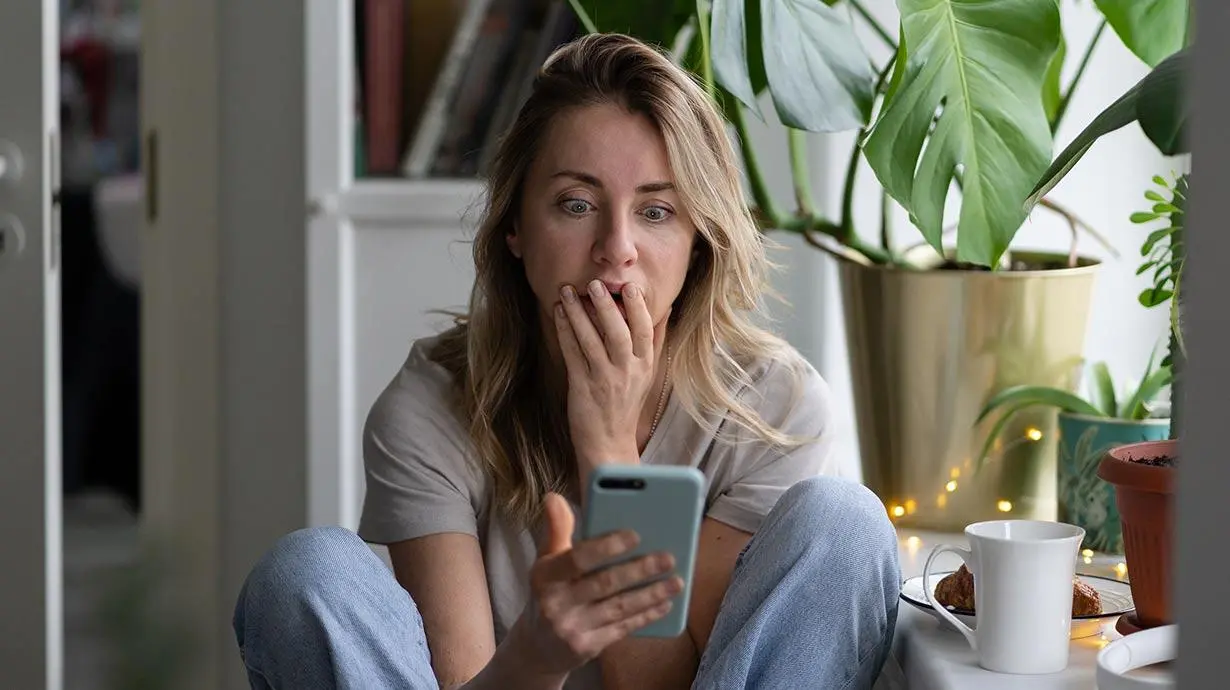
Your kid got a text from an unknown number? Turn it into a learning opportunity.
Everyone should know how to report junk and block unwanted callers, but the unknown texter experience can teach other valuable lessons, too.

If you own a phone, you’ve likely received a text or call from an unknown number. It’s such a common occurrence that you might not think twice about it. But have you talked to your child about the right way to handle those messages? After all, they might not have the experience to be able to determine if a text is a harmless message from a new friend, a piece of spam or something more serious.
Identifying the intent behind a text from an unknown number isn’t always straightforward. So we spoke with two experts who offered practical guidance for parents who want to help their kids navigate unknown numbers confidently as they grow in their digital independence.
1. Assess the level of urgency.
A text from an unknown number might trigger some initial panic, but Erin Pash, MA, a licensed family therapist, says it’s important to approach the situation calmly. “Ask your child to show you the message without judgement, since curiosity (rather than alarm) will keep communication open,” she says. “Your reaction sets the tone for whether they’ll come to you in the future.”
Of course, your level of concern will depend on context. While most texts from unknown numbers won’t be a reason to enter crisis mode, you should watch for obvious red flags, such as:
- Messages that include links or attachments
- Unusual interest in a kid’s location or schedule
- Pressure for your child to respond quickly or immediately
- Attempts to move the conversation to another platform
- Requests for secrecy (e.g., “Don’t tell your parents!”)
These demand immediate action—including reporting junk and blocking the sender—and a conversation with your child about online safety.
2. Teach kids to identify signs of an unknown number text scam.
A common text scam begins with a vague but seemingly innocuous text from an unknown number, either starting a casual conversation (“Hi, how are you?”) or pretending to initiate plans (“Lunch next week?”). The goal is to trigger the recipient’s social obligation to respond, building a rapport with them before requesting money or an in-person meetup.
But how do you teach kids to determine whether the text they’ve received is from a potential scammer or an actual friend? Pash recommends the following:
- Remind your child that friends should identify themselves when getting in touch for the first time (by saying what their name is and the reason they’re contacting you from an unfamiliar number).
- If your child is still unsure, let them know it’s okay to verify who the number belongs to through another channel. That might mean calling the friend or contact at a different known number, messaging the friend on social media or asking a mutual friend if they recognize the number.
- Consider context clues. Would your friend actually text you this way? Do they know details only a real friend would know?
- Encourage your child to trust their gut. If something feels off, it probably is. And they should never feel obligated or pressured to respond.
- Always ask an adult if you’re unsure, it’s better to block someone you know and fix it later than accept it and let a scammer have a window into anything information about you
3. Prevent further unwanted contact from an unknown number.
According to Alanna Powers-O’Brien, Research and Program Specialist at the Family Online Safety Institute, blocking and reporting unknown numbers are strategies that are underused by both teens and adults, even though they are the quickest ways to prevent further unwanted contact from an unknown number. Both iOS and Android make it easy, as all messaging systems have simple ways to delete and report spam or block and report spam, depending on the OS you use. You can also easily block numbers by selecting the sender’s icon at the top of the message and following the instructions to block that contact. Walk through these steps with your child on their device to make sure that both of you know exactly how these features work.
Anything that you suspect is a scam or attempted fraud can also be reported to the Federal Trade Commission—even if your child didn’t get to the point of sending money to a scammer.
While there’s no foolproof way to prevent all spam messages from reaching your child’s device, our experts recommend the following safety precautions:
- Adding your child’s phone number to the National Do Not Call Registry
- Enabling spam/scam filtering features (built into both iOS and Android)
- For younger kids and teens, installing parental controls like Verizon Family Plus that limit communication to a pre-approved list of trusted contacts or use Verizon’s Call Filter
- Using Filter Unknown Senders to separate messages from non-contacts, as well as apps that screen calls and texts
- Enabling alerts that will notify you whenever your child is contacted by a number not saved to their contacts
- Reviewing and adjusting privacy settings on social media to reduce the likelihood that your child’s phone number will be harvested

4. Establish a protocol around exchanging numbers.
Not all unknown numbers are bad. For example, they could be a friend or family member with a new number. To cut down on the uncertainty, help your child establish some clear steps for sending or receiving initial contact info from peers. For example, Pash recommends instructing kids to save new contacts immediately with a first and last name, or to ask new friends to include an identifier of some kind (“Hey, it’s [name] from [how they know each other].”) in the first texts that they send.
Powers-O’Brien and Pash also recommend the following as ways to promote safety and reduce the likelihood that your child will receive messages from an unknown number:
- Teach them not to post their phone number online (such as on their gaming profile, social media or in a group chat with a stranger).
- Help them establish a code word that someone can use in a text to signal that they are who they say they are.
- Encourage them to use messaging apps with usernames (instead of texting via a phone number) when possible, especially for friendships formed online.
- Support them in being selective about who gets to have their phone number.
5. Share your experience with suspicious text messages to teach phone safety for kids.
Showing your kids a text you’ve received from an unknown number—and thinking out loud with them about whether and how to respond—can be a great way to model some of the skills you hope to impart. “This isn’t about fear—it’s about competence,” Pash says. “Kids need practice discerning context, assessing risk and making decisions with our guidance before they do it alone.”
Skills and steps to show them your own process might include:
- Taking a moment to pause before replying, especially when an unknown texter is manufacturing a sense of urgency
- Verifying the identity of a contact through another channel
- Blocking and reporting obvious scam texts without shame or anxiety
- Making a screenshot of or otherwise documenting a concerning message
- Identifying manipulation tactics such as secrecy, flattery or a false sense of urgency
- Trusting your instincts when something feels off
Most crucially, Pash emphasizes the importance of encouraging kids to share concerning messages with trusted adults without shame, since this will help them develop the skills and confidence they’ll need to handle these situations independently down the road.
“Shame is the enemy of safety,” Pash says. “If kids fear being ‘in trouble’ for receiving a concerning message or accidentally engaging, they’ll hide it. I let my kids know that receiving a scam isn’t their fault and even engaging briefly is fixable.”
“Our job as parents is to be the external prefrontal cortex until theirs fully comes online,” Pash says, “and then gradually transfer that responsibility as they demonstrate readiness.”
You’re there for them with Verizon Family. Verizon’s there for you—including our 3-year price lock.*
*Learn more about our 3-year price lock guarantee.
Screenshot this for later

Turn unknown numbers into learning moments
- Pause. Teach kids to take a beat and determine how—or if—they should react.
- Check the scam signals. Remind kids to trust their gut.
- Report, delete, block. Report junk as junk and block those numbers. Your smartphone makes it easy. Make sure your child knows how these features work.
- Avoid future problems. Make an easy-to-follow protocol for texting from a new number that your child can share with their friends. Something like “This is [name] from [X class],
verizon.com/parenting