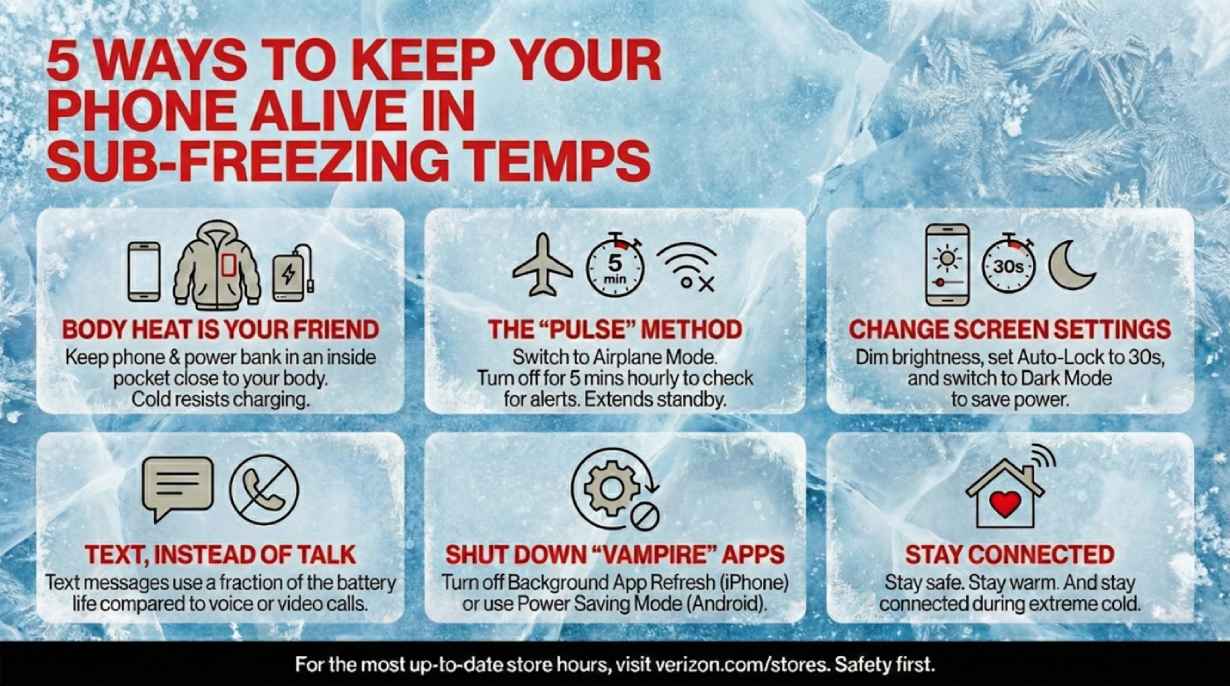
When extreme cold weather strikes, commercial power can be impacted. And that’s when a dead phone battery becomes a safety hazard. Cold temperatures chemically deplete Lithium-Ion batteries, causing them to shut down sometimes even with a 30% charge remaining.
Here is how to maximize your battery’s potential until commercial power is restored:
1. Body Heat is Your Friend. Cold is the enemy. If your house is freezing, do not leave your phone on a table or counter. Keep it in an inside pocket close to your body heat. If you are using a portable power bank, warm that up against your body before plugging it into your phone; a cold battery resists charging and wastes energy.
2. The "Pulse" Method. If your cell signal is weak (one bar or SOS), your phone will use more battery power trying to find a better connection.
- The Fix: Switch to Airplane Mode immediately.
- The Pulse: Turn Airplane Mode off for 5 minutes once every hour to check for messages/alerts, then turn it back on. This can extend standby time from 12 hours to 48+ hours.
3. Change Your Screen Settings. Your phone’s screen is its biggest power drain.
Manually dim the brightness to the lowest visible setting.
- Set "Auto-Lock" or "Screen Timeout" to 30 seconds.
- Switch to "Dark Mode" (this significantly saves power on modern OLED screens).
4. Text, Instead of Talk. Voice and video calls require a continuous, dedicated connection which uses more power. Text messages travel in small data packets that can "squeeze through" congested or weak networks much more efficiently, using a fraction of the battery life.
5. Shut Down "Vampire" Apps. Background activity kills batteries.
- iPhone: Settings > Battery > Low Power Mode > ON.
- Android: Swipe down > Power Saving Mode > ON (Select "Limit Apps and Home Screen" for maximum duration).
Stay safe. Stay warm. And stay connected.